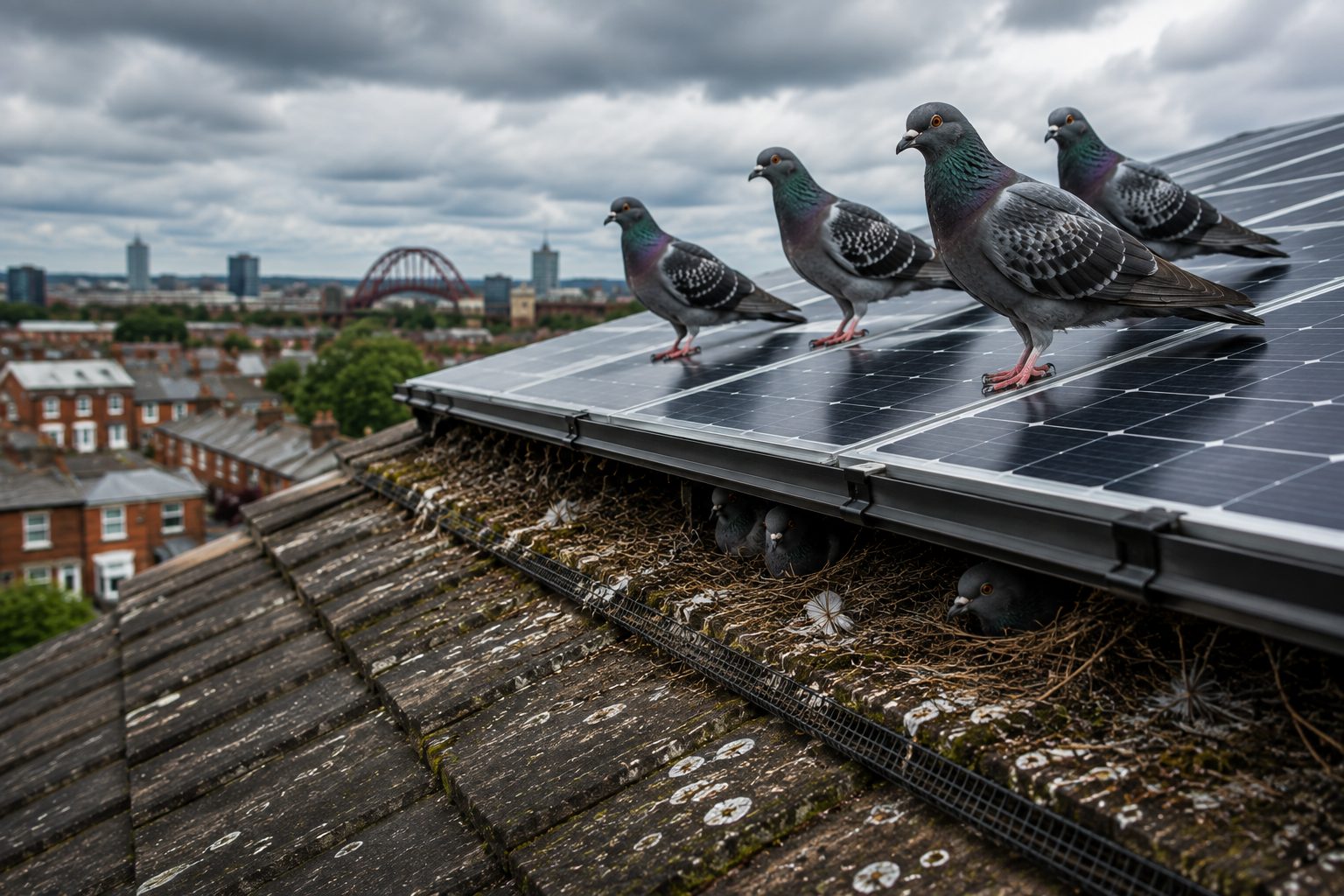
Nesting activity beneath your array
Bird Nest Removal From Solar Panels
Tell us about the nesting problem.
Nesting activity beneath your array
Tell us about the nesting problem.
Nesting material beneath solar panels is a sign that birds have established the array as more than an occasional resting place. Before anything is removed or access is blocked, it is important to establish whether the nest is active and what work can appropriately be carried out.
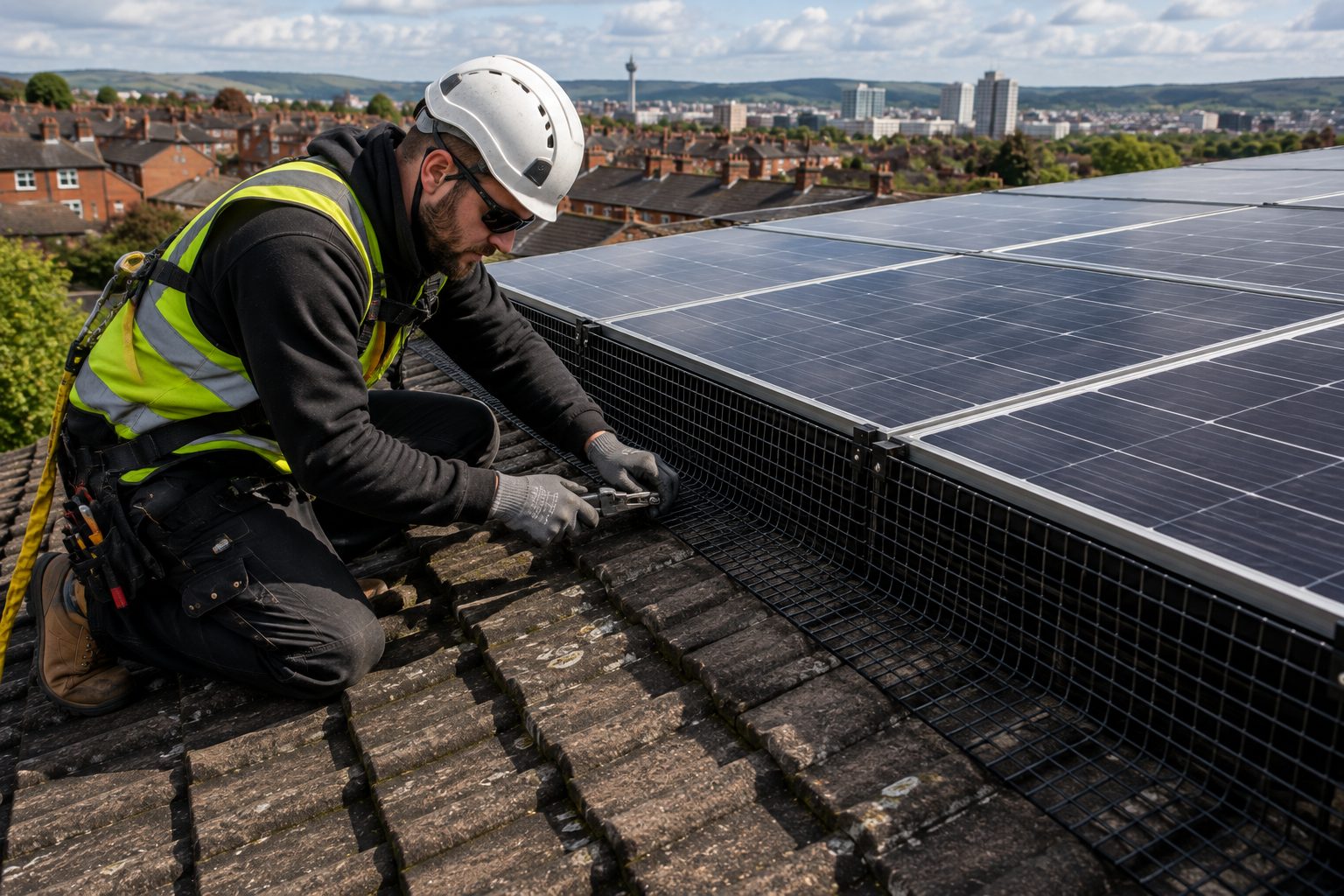
Independent providers assess reported nesting beneath solar panels and plan the next steps around the circumstances found at the property. Where removal can appropriately take place, the area can then be prepared for proofing to reduce the likelihood of birds moving straight back underneath.
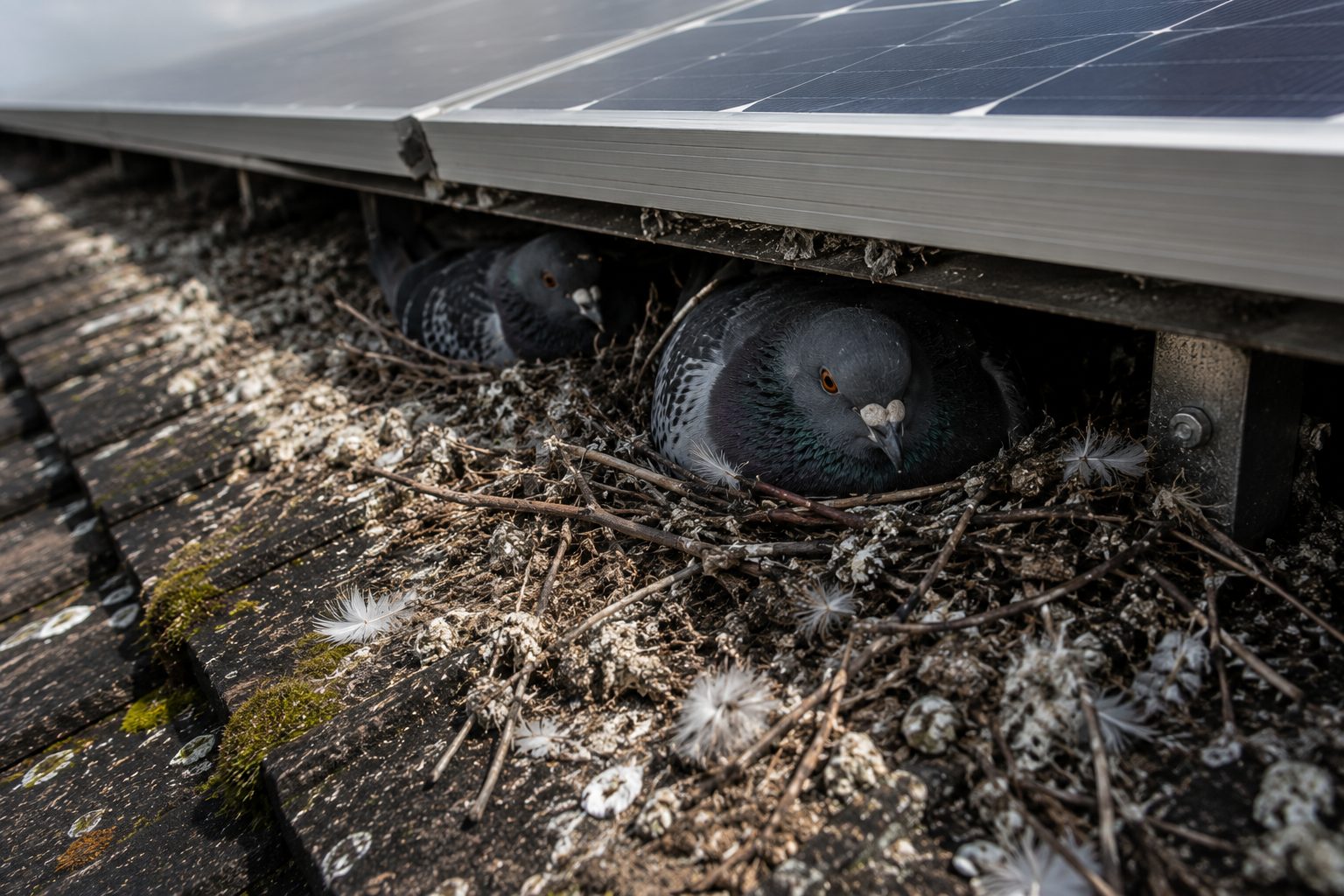
Bird nests and nesting birds can be legally protected. Independent providers therefore treat nest removal as an assessment-led service rather than assuming every nest can immediately be cleared.
Independent providers establish where the material is located and whether there are signs of current bird activity.
Removal is undertaken only where the circumstances allow the work to be carried out appropriately.
Once suitable removal work is complete, the accessible area can be prepared for exclusion.
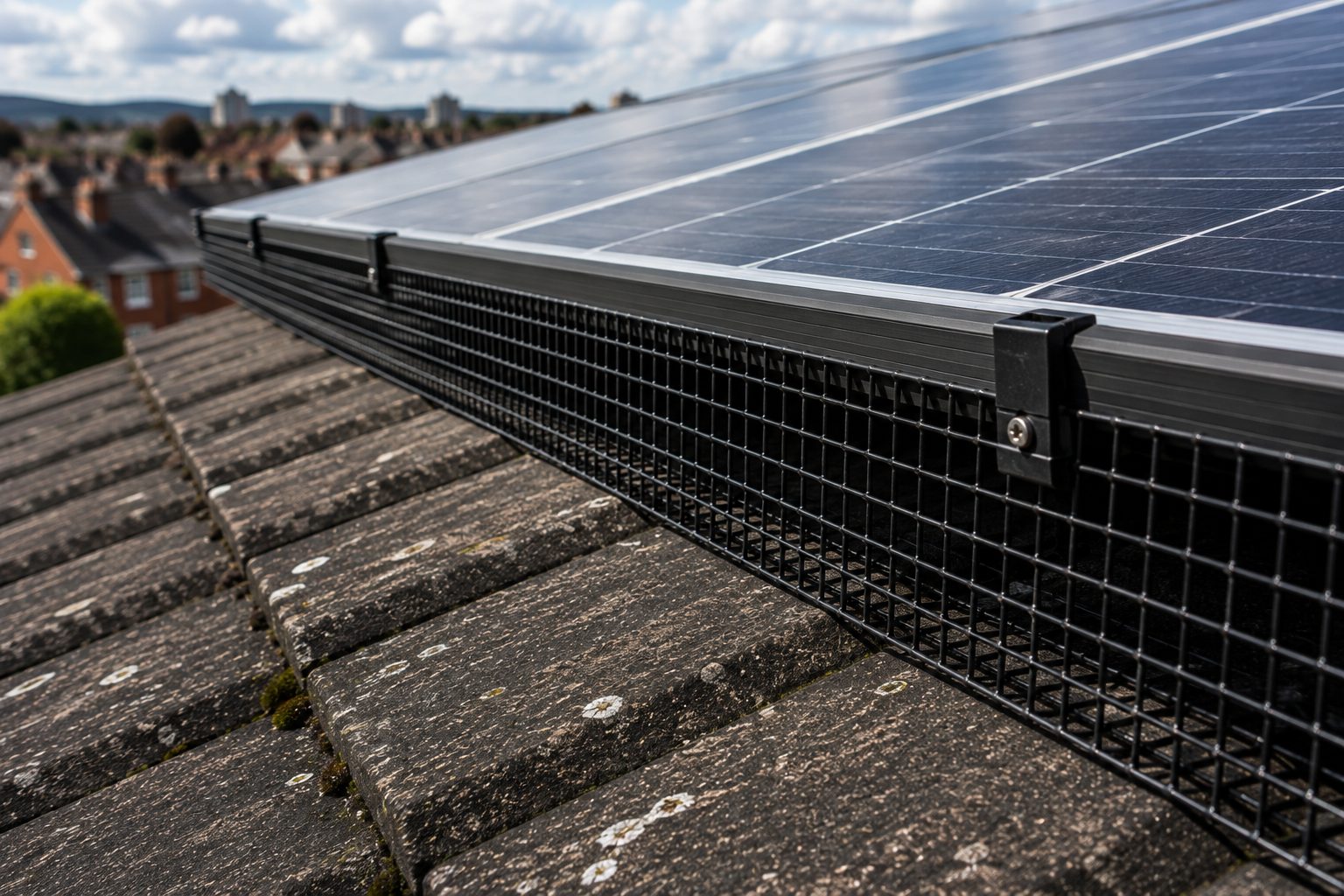
Perimeter mesh can help stop birds returning to the same sheltered space.
| Service | Estimated Cost | Average |
|---|---|---|
| Nest assessment | Quoted individually | Varies by access |
| Removal and preparation | Quoted individually | Varies by condition |
| Removal with perimeter proofing | Job-specific quotation | Varies by array |
Costs vary with roof access, the location and amount of material, array size and any subsequent proofing required.
Independent providers do not assume that every reported nest can simply be removed immediately.
Once appropriate removal is complete, they can address the access that allowed birds underneath.
The work is planned specifically around rooftop solar arrays.
Contact us if you suspect birds are nesting beneath your panels and need the situation assessed.
Free — no obligations
Describe visible nesting material, bird movements and any noise beneath the panels.
The location and apparent nesting status are considered.
Independent providers establish whether removal work can proceed and what preparation is needed.
Suitable material is removed where circumstances permit.
The vulnerable perimeter can then be protected against renewed access.